Blog

  • Events Industry 2023, Wrapped: Our Top 10 Most Popular Blog Posts

    Events Industry 2023, Wrapped: Our Top 10 Most Popular Blog Posts

    As we close the door on 2023 and prepare to launch into what will undoubtedly be another busy year in the events industry, we’re excited to take a look back. Throughout the year, the RainFocus blog has helped event leaders stay ahead of the curve. We provide thoughtful advice from our seasoned executives on the most impactful trends, as well as quick practical tips for navigating the day-to-day work of planning and executing events around the world. 

    To cap off our journey through the year, we’re counting down our top 10 most popular blog posts in 2023. Join us as we revisit these highlights and the trends that defined the year in the events industry: 

    10. Everything You Need to Know About Badge Printing

    Event success comes down to the details. To the uninitiated, badges may seem minor compared to elements like booking keynote speakers or planning a massive welcome party. But attendee badges perform a critical function. Is pre-printing or printing on demand more efficient? How should you differentiate access types? This quick guide helps your team zero in on the right choices.

    9.  The Path Forward: JR Sherman and Alicia Tillman Reflect on Pandemic Pivots and Events’ Value in Any Economic Climate 

    RainFocus INSIGHT gives attendees expert guidance on the most important events industry trends, opportunities, and challenges for the year. This blog post recapped the fireside chat between RainFocus CEO JR Sherman and Alicia Tillman, RainFocus board director and current chief marketing officer at Delta Air Lines. No matter the size of your company or your events, these experts’ reflections on customer journeys, budgets, the future of virtual events, and more continue to resonate.

    8. Early Bird Pricing Strategy: The Logic and Science Behind Scarcity and Value

    Another evergreen favorite, this post dives into the strategy behind offering early-bird pricing for your event. With events under pressure to deliver ROI and meet attendance goals, it’s more important than ever to hit the ground running with a strong response to your special offers for attendees who register early.

    7. Conversations: A Look at Today’s Event Trends with Ashleigh Cook 

    The Conversations series, a signature part of the RainFocus blog, features candid Q&A sessions with RainFocus’ most knowledgeable executives. This 2022 post with Ashleigh Cook, now our CMO, zeroes in on opportunities and challenges that continue to factor heavily into events leaders’ planning. Readers found valuable advice on everything from attendee engagement to smart content reuse to ongoing efforts to increase personalization.

    6. Fifteen Points of a Great Recap Video

    After an event wraps, it’s time for measurement, analysis, marketing and sales follow-up … and putting together a fun recap video to showcase your success and keep the enthusiasm going. Readers appreciated the detail in this blog post and the provided client examples.

    5. How to Structure Cancellation Fees at a Conference

    Like badge printing, early-bird pass offers, and recap videos, cancellation fees represent another event element that may seem minor but can have a big impact. Balancing ongoing relationships with financial realities — and making the whole process as efficient as possible — requires the right approach. This popular blog post covers all the nuances.

    4. What Should You Look for in a Modern Event Management Platform?

    When exploring options for any new technology, buyers often turn to leading analyst firms’ reviews and reports comparing leading platforms. This year, Forrester compared RainFocus and 13 competitors for The Forrester Wave™: B2B Event Management Technology, Q1 2023 report, and we were named a Leader. But this popular blog post is about more than boasting — it also lays out a few key recommendations from Forrester’s analysts for what to look for in any B2B event management technology.

    3. How to Supercharge Your Marketing Channel With Event Data

    Omnichannel marketing is making big waves this year in the events industry, so it’s no surprise that this blog post ranked near the top in popularity. The end of third-party cookies, meanwhile, has spotlighted the importance of zero- and first-party event data like never before. Best of all, we also co-wrote an entire (free!) e-book with Adobe if you’re ready to take the next steps.

    2. A First Look at RainFocus INSIGHT 2024: What to Expect 

    It’s clear the excitement around RainFocus INSIGHT continues to build! Since this post was first published, we’ve also released a lot more information about the event. Check out the session catalog and preliminary speaker list, bonus excursion offerings, and more. There’s still plenty of time to get the primer through this blog post and then register to join us in Salt Lake City.

    1. How to Harness the Power of Events to Drive Business Growth 

    Finally, our most read blog post in 2023 — by far — tackles a universal, timely theme. Whether or not your organization faced budget cuts and other economic challenges this year, turning to your events channel to fuel marketing and sales success is a smart strategy. Our experts delved into exactly how to make sure those events deliver maximum (and measurable) ROI. For even more guidance, check out the accompanying free e-book!

    We’re looking forward to another year of bringing you another year of thought-provoking discussion and practical guidance on the blog. We can’t wait to see what 2024 brings!

  • The Case for Adding Your Sales Kickoff to Your Corporate Event Platform

    The Case for Adding Your Sales Kickoff to Your Corporate Event Platform

    Sales kickoffs (SKOs) happen every year, setting an important annual foundation for the sales team and the entire organization. 

    However, SKOs are often managed on one-off platforms, and many sales teams rely on standalone registration tools that require supplemental spreadsheets and email threads. As a result, leaders get a good idea of who showed up at the event, but not much else. They don’t know which sessions were attended or which roles were most engaged.

    With the SKO disconnected from their corporate events, they also have no way to compare sales readiness to sales-driven event attendance. This lack of visibility is a significant gap given how much the SKO and the sales team’s readiness can shape performance.

    The Hidden Costs of Disconnected Tools

    Many teams believe they are saving money by delivering SKOs outside of their core event platform. However, when data lives in multiple places, reporting requires manual reconciliation. That’s time that could be spent strategizing instead if they incorporated the same integrations and workflows their team has already refined for other events.

    There’s also a procurement cost. Bringing in and managing a separate vendor for an internal event means another contract and ongoing effort. A more straightforward approach is to use the same platform that your events team is already familiar with. 

    Engagement Data Provides Maximum Value

    SKOs are a unique opportunity to gather the entire sales organization — and other stakeholders — in one place as they move through a structured program. With advanced event technology, you can learn which sessions had the highest attendance, which reps stayed engaged, and which dropped off. 

    Without a platform built to capture engagement data, you’re left with attendance headcounts and post-event survey scores. With the right infrastructure, sales leaders and event teams can see SKO engagement by region, business unit, or role, and use that to assess readiness and improve the program the following year.

    The new RainFocus Sales Module,  makes having a single platform for both corporate events and your SKO even more impactful. Sales can get the training they need, nominate key business contacts to attend events, and engage with those contacts through a familiar platform tied to their CRM. Every event interaction can be measured by leadership. 

    What Good Platform Support Looks Like for a Sales Kickoff

    The right platform for a sales kickoff covers event aspects that are easy to underestimate until they become problems with the wrong platform.

    • Registration and segmentation. Look for customizable registration forms, the ability to assign sessions based on attendee attributes, and strong segmentation capabilities.
    • Mobile and on-site experience. SKO attendees need to navigate their schedules in the moment. A mobile app with their personalized agenda, combined with smooth on-site check-in, gives your reps everything they need in the palm of their hand.
    • Reporting and data. SKOs generate attendee data with value beyond the event itself. Attendance rates by session, engagement by region or business unit, and KPI dashboards that show event progression give sales leaders and event teams the information they need to improve.
    • Content management. Even for internal events, managing session submissions, reviews, and approvals benefits from a structured process. A platform that supports this workflow keeps content organized and auditable.

    The Case for Consolidation

    The incremental cost of adding your sales kickoff to your existing platform is almost always lower than maintaining a separate tool. More importantly, your sales org becomes part of the same picture as the rest of your event portfolio, and you can start drawing more detailed connections between sales readiness and business outcomes.

    RainFocus is built to deliver your SKO alongside your other company events, eliminating the need for extra procurement cycles, data downloads, or new integrations. Request a demo to see if RainFocus is a good fit for your organization.

  • How AI Agents Create a Frictionless Experience for Attendees

    How AI Agents Create a Frictionless Experience for Attendees

    What gets people to an event? For some attendees, the “big attractions” — the famous keynote speaker, the eagerly anticipated major product announcements, the VIP networking outing — are the main draw. Others want to forge new industry connections and build their knowledge in a dedicated environment. 

    Regardless of their goals, all attendees want a memorable, fulfilling event experience. But in return for their investment of time and money, they also want to minimize frustration. Even minor schedule snags and missed opportunities can compound over the course of several days at a conference. These impressions erode overall event satisfaction, no matter how impressive the session content or parties.

    An always-available helper

    With an unlimited budget, giving every attendee a personal on-call expert who can instantly answer any question would be a fantasy solution. In the real world, the latest AI agents — especially when backed by accurate knowledge and trusted data privacy protections like RainFocus’ new Concierge Agent — are the next best option. 

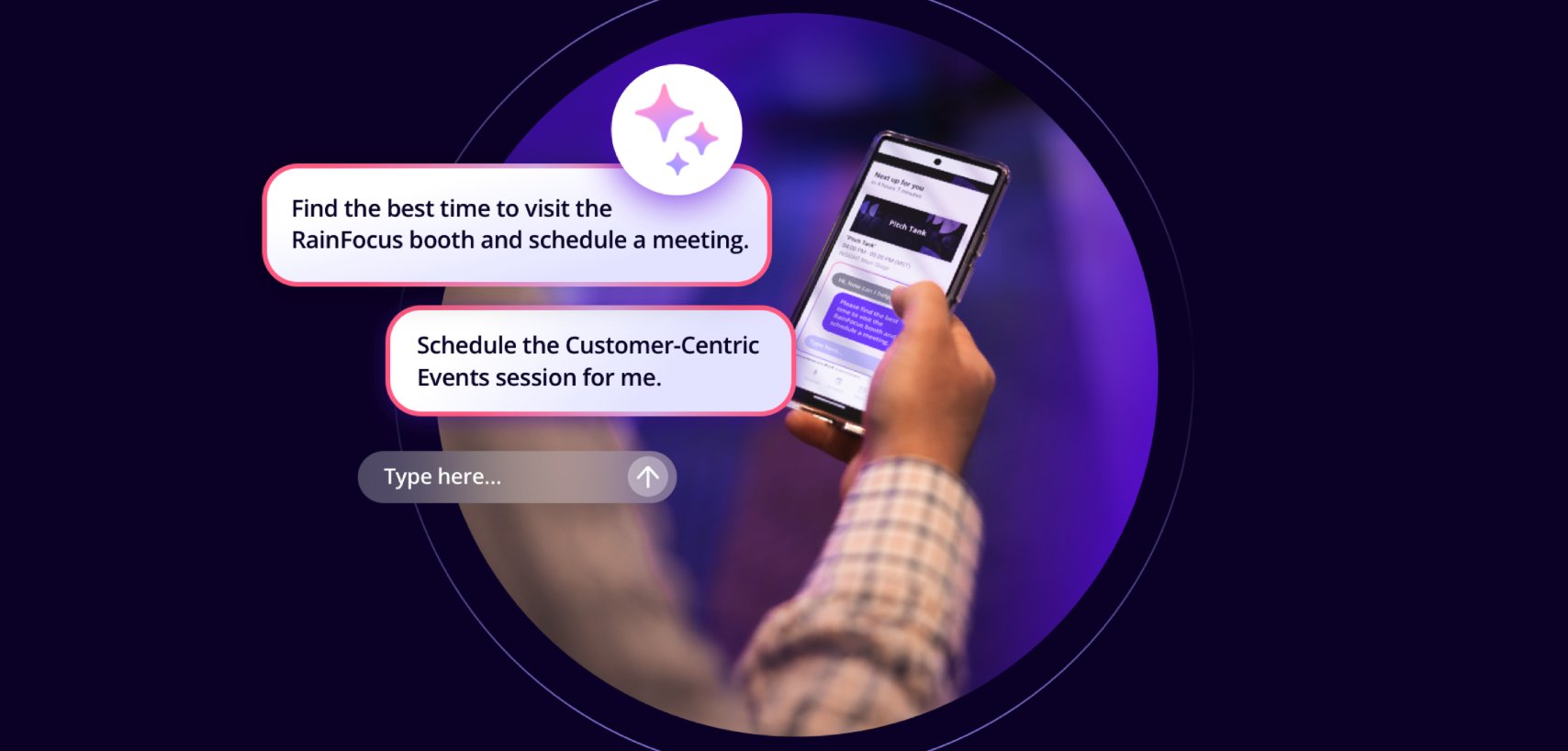
    Concierge Agent, one of the growing number of powerful agents within the RainFocus Nexus AI ecosystem, serves as a virtual expert that gets attendees the information they need as they plan their schedules and maximize their time at the event. Even at the biggest, most complex conferences, attendees can quickly create an experience that works best for them and their event goals, and avoid wasting any time wondering about practical on-site information.

    We’ve identified some of the most common points of friction and overwhelming decisionmaking for event attendees. Fortunately, asking a well-informed agent a quick question or two clears everything up — while reducing the workload for the humans planning and running the event. 

    Here are a few examples of agent assistance, from schedule planning to on-site navigation:

    Pre-event agenda-building

          “Which of the track sessions happening on Wednesday afternoon should I sign up to learn more about data security?”

          With session catalog data as well as data in their Global Attendee Profile within the RainFocus platform, Concierge Agent makes relevant suggestions in response to questions asked in natural language. Attendees can easily learn about their options while bypassing content less suited to their role and interests.

          Real-time scheduling

                “Is that special guest leadership workshop tomorrow filled already? Can you reserve my spot now if there’s still space?”

                Agents can take action on behalf of attendees after providing relevant information, saving them time while respecting their decisions and permissions. Because Concierge Agent is informed by the latest event information, it can communicate real-time availability and last-minute changes. 

                Simple on-the-ground guidance

                  “Which room will the orientation session for new attendees be held in?”

                  “I’m hungry. When and where will lunch be served today?”

                  With exciting jam-packed agendas as they make the most of their time on-site, attendees need each day at the event to run smoothly, even as they navigate large, unfamiliar venues and potential schedule changes. The event mobile app helps keep vital information easily accessible. Even better, attendees can turn to AI agents like Concierge Agent, available in both a desktop experience and mobile experience, to get specific answers and continue on their way.

                  Efficiency drives event satisfaction

                  Thanks to tech-enabled optimization, event attendees already expect streamlined experiences in their everyday lives. For example, when they bring the family to a busy amusement park, they can view live wait times for rides and even purchase timed line-skipping passes. When they pull into the parking lot at a big-box store, their shopping app automatically displays a store map that highlights where every item on their list can be found on the shelves. 

                  So, as attendees plan for your event and then arrive on-site, the last thing they want to do is waste any time figuring things out. 

                  Event satisfaction is driven not only by great content and valuable relationships, but also by an informed, frictionless experience. Learn more about Concierge Agent and other agents in the RainFocus Nexus ecosystem here.

                1. Expectations vs. Reality: Comparing 2026 Event Strategies and Execution

                  Expectations vs. Reality: Comparing 2026 Event Strategies and Execution

                  Each year, our Events and Marketing Strategy Survey helps us understand event teams’ current strategies and plans for the upcoming year. As much as every team tries to stay on top of industry changes, the world of events can change fast, forcing major strategy changes. 

                  Now deep into the second half of 2026, we’re taking a look back at last year’s survey responses and comparing respondents’ plans to real-life event activities, based on our latest benchmark data covering the first half of the year. How closely have event plans for 2026 aligned with execution? Have any unexpected trends reshaped strategies? 

                  Three Planned Strategies That Proved Successful

                  Event format mix: Most event professionals maintained the same balance of in-person, virtual, and hybrid events as they predicted in last year’s survey. Our 2026 benchmarks show that all three delivery types are still running in volume, with no major drop-offs. Virtual events in particular remain well-attended, demonstrating the continued value of this event type. In addition, session attendance is growing, with average session participation above 70%.

                  Increased meeting activity: Meetings were noted as the dominant networking strategy in last year’s survey, cited by 60% of respondents. The latest benchmark data shows meeting participation rates have held up for on-site and hybrid events. Activities per attendee remain especially high at large events (averaging 12–17 activities). Teams continue to focus on agendas that include plenty of networking and other activities beyond sessions.

                  Email efficiency: Marketing emails were the primary channel for event content reuse for 62% of survey respondents. Now, benchmark data shows email marketing is a top AI application for many teams (43%). These two statistics might initially seem disconnected, but in practice, they may point to greater scaling of the email channel and even more content reuse with less effort. 

                  One Event Execution Surprise

                  Lower attendance rates: On-site attendance and check-in are both down from the last half of 2026. Last year’s survey showed that most teams weren’t planning to shrink their event programs. Instead, this dip may reflect market fatigue or increased competition for attendees’ time. We’ll watch the data for the second half of the year. Meanwhile, despite lower attendance, engagement remains high. 

                  The 2026 Events and Marketing Strategy Survey is now open! Share your thoughts and predictions to help us uncover a new set of trends in the events industry. Results of the 2026 survey will be shared during INSIGHT Premiere. Participants will receive early access to findings.

                  To learn more about RainFocus’ benchmarks, visit www.rainfocus.com/platform/performance-strategy/

                2. The Role of Agentic AI in Event Configuration

                  The Role of Agentic AI in Event Configuration

                  Every event program has its own requirements, and meeting all of them often requires learning new processes under pressure. Whether a directive comes from leadership or you’re rolling out a new strategy, there’s a good chance you’ll need to use a new solution you’ve never used before. 

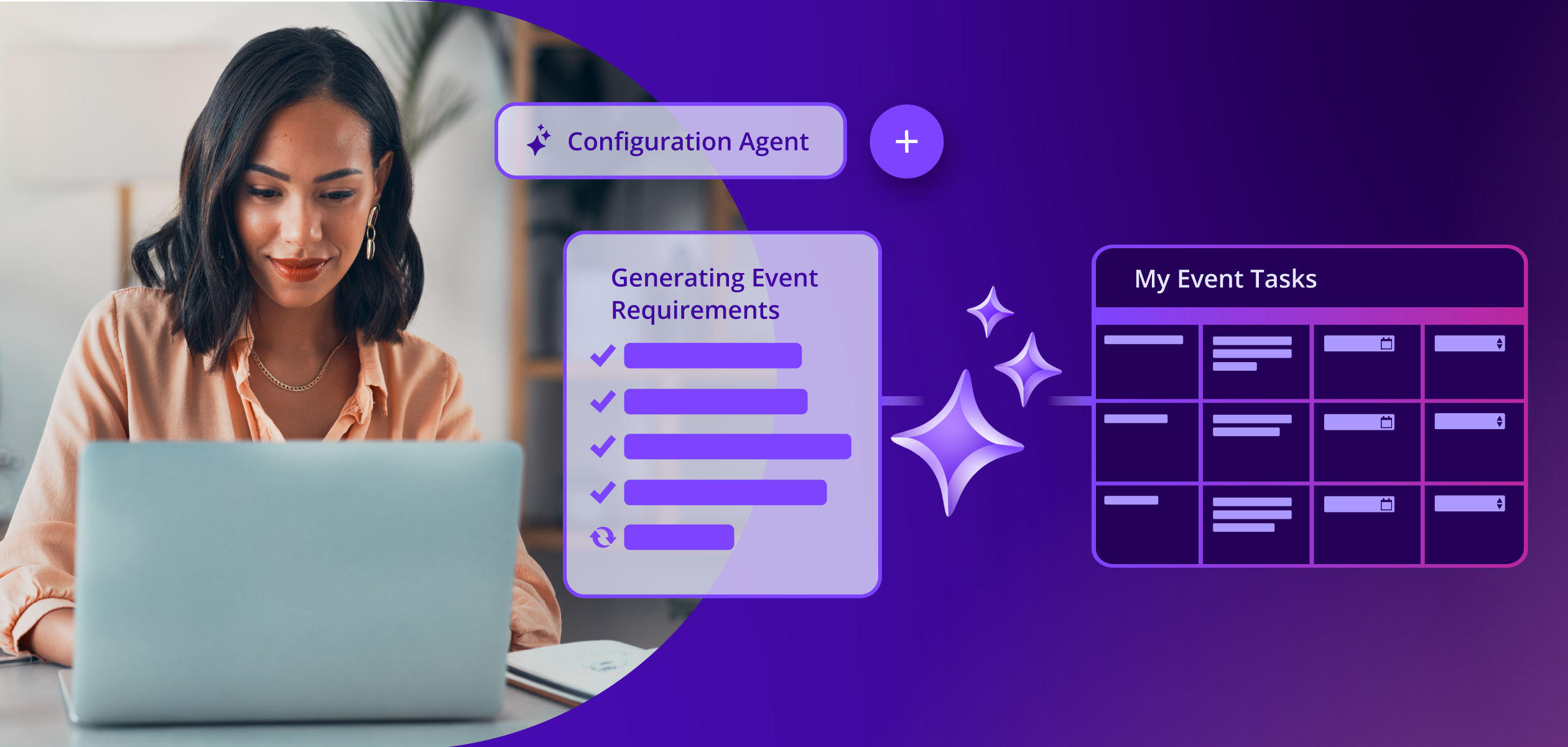
                  This is where AI tools can help. The Knowledge Agent and Configuration Agent, two new agents in RainFocus Nexus, give teams instant answers to all their configuration questions and make setup much easier. 

                  What is RainFocus Nexus?

                  RainFocus Nexus was introduced earlier this year. AI agents serve as users’ teammates, helping to configure events and meet attendees’ needs at scale. Since the introduction of Nexus, we have continued to expand with new agents. In this blog post, we’ll spotlight the new Knowledge Agent Configuration Agent. 

                  Get Detailed Answers to Configuration Questions

                  The Knowledge Agent draws information from RainFocus’ official Help Center documentation to answer your questions about the platform. It uses natural language processing to help you find best practices for your specific event needs. Responses to past questions also serve as additional context for current discussions. If the agent can’t answer your question, the question will automatically be escalated to Client Care directly from the conversation.

                  Let AI Sort Out Details For You

                  The Configuration Agent provides another level of support by handling parts of setup, such as building dynamic speaker and exhibitor task workflows. As with all Nexus agents, the Configuration Agent is built with a human-in-the-loop validation to ensure every experience meets defined standards. The agent automatically applies logic parameters, target milestones, and execution filters to tasks so that the right steps trigger dynamically as circumstances change. In the near future, Configuration Agent will extend beyond speaker and exhibitor workflows to other parts of the RainFocus platform. 

                  Benefits of Using AI for Configuration

                  Deploying agents saves time for busy event teams. 

                  • Changes are made once and applied throughout the platform. There’s no need to click between various modules or tabs to enter information. Your entire workflow is put together in one table. 
                  • Teams can work autonomously. AI reduces back-and-forth conversations with your support team. 
                  • Details never get missed. Due dates, file types, roles, and permissions are important for speakers’ and sponsors’ task lists. Nailing every detail the first time saves you from having to make changes to workflows post-launch or update profiles manually. 
                  • Challenges are documented in a centralized location. Rather than sending requests through email or Slack, teams can stay in the platform to request support. 

                  The Knowledge and Configuration Agents reduce the back-and-forth that slows teams down during setup. Instead of toggling between modules, chasing down answers, or waiting on responses from other stakeholders, you have what you need in one place.

                  When used with the Concierge Agent, which supports attendees throughout their event experience, these agents ensure everyone’s needs are met. Visit rainfocus.com/nexus to learn more or request a demo.

                3. RainFocus Named a Leader in the IDC MarketScape for Worldwide Virtual Events Applications 2026

                  RainFocus Named a Leader in the IDC MarketScape for Worldwide Virtual Events Applications 2026

                  Virtual events have become one of the most valuable tools for event teams focused on growing pipeline. They reach audiences that in-person events cannot, and when done well, they generate the first-party attendance data that sales and marketing teams need to be successful. How much of that value you capture comes down to platform choice.

                  We are proud to share that RainFocus has been named a Leader in the IDC MarketScape: Worldwide Virtual Events Applications 2026 Vendor Assessment (Doc #US54140026, July 2026).

                  The Impact of Virtual Events on Revenue

                  We believe that an IDC MarketScape dedicated to virtual events applications is a strong indicator that the format has become an essential part of the modern event marketing mix. Our research demonstrates that virtual events are performing well, with a 9% increase in attendance year over year. Because virtual events require fewer logistics to plan, they serve as a powerful tactic for reinforcing larger conferences or summits. The data they provide shows genuine interest from existing and prospective customers.

                  RainFocus is built with a single system-of-record architecture that seamlessly integrates all of an organization’s event data with their CRM, marketing automation platform, or customer data profile. With a comprehensive view of event engagement, organizations can see exactly how virtual events contributed to in-person event engagement, upsells, and new deals. Organizations can also use RainFocus integrations to automate campaigns triggered by real-time intent signals. 

                  “The system-of-record architecture is a differentiator, paired with strong customer satisfaction feedback. The Adobe Experience Platform integration is a plus, as is the ability to support over 100,000 concurrent viewers.” – IDC MarketScape 

                  Virtual Events and AI 

                  Organizations that have a single system of record for their events are far better prepared to maximize AI. RainFocus’ in-platform AI agents can use integrated data to configure virtual events or respond to attendees’ questions. RainFocus’ MCP profiles enable customers to visualize and act on their event data with their preferred LLM. Every AI interaction enriches your customers’ profiles. 

                  The Importance of Safeguarding Data

                  Because virtual events capture a significant volume of attendee data, event teams need confidence that the platform managing that data meets the security standards their organizations and attendees expect. 

                  RainFocus is ISO 27001:2022, PCI-DSS, and SOC 2 certified, and fully compliant with GDPR and CCPA regulations. With a proven 99.999%+ uptime, teams can run virtual events without worrying about the infrastructure behind them.

                  Request a demo to learn more about RainFocus.

                4. Top Tips From Event Pros in Our “Event Perspectives” Interviews: Part Two

                  Top Tips From Event Pros in Our “Event Perspectives” Interviews: Part Two

                  Our Event Perspectives videos share insights from some of the most forward-thinking minds in the events industry. In the first blog post of this series, we highlighted unique advice recent guests offered. This time, we’re focusing on where they converge. Discover what principles came up again and again, regardless of each guest’s company size, event type, or years of experience.

                  1. Use AI Effectively

                  AI came up in almost every conversation. The consensus is that AI should be used intentionally to meet the needs of various event stakeholders (i.e. attendees, speakers, exhibitors, and leaders). Guests warn against unintentionally wasting time trying to experiment with AI. 

                  “Don’t use AI for AI’s sake,” said Hannah Elston, senior manager, partnerships, marketing, & communications, of Event Leaders Exchange. “Every use case should be relevant and purposeful.” Her advice is to use it as a strategic advisor, asking it what you haven’t considered, where the gaps are, and what could be improved.

                  Sanya Khera, senior product manager of digital experiences at Intuit, added a critical note, “When feeding event data into AI tools, clean your data first.” If your input is messy or incomplete, the output will be too. Event Perspectives guests agree that when used correctly, AI can create a more valuable event experience for everyone involved. 

                  2. Break the Mold to Adapt and Innovate

                  Several guests pushed back on assumptions about how events should be run. “Don’t just think outside the box — crush it,” suggested the chairman of Endless Events, Will Curran. His argument is that starting from a blank page, rather than a familiar template, opens up decisions that never get made when you’re iterating on last year’s format.

                  Pam Corcoran,VP of global events at CrowdStrike, framed breaking the mold as a way to navigate uncertainty, “In grey areas, keep trying different directions rather than waiting for clarity to arrive.” She explains that event planning rarely unfolds as you would like. The key is to be decisive and adapt as needed. 

                  Hannah also spoke up against repeating old plans saying, “’We’ve always done it this way’ is the most dangerous sentence in the events industry.” She shared that her team is currently rethinking their content strategy entirely, reframing sessions as live shows led by audience input rather than moderator-driven interviews.

                  3. Prioritize Health and Energy

                  This is the most consistent advice given throughout the series. Too often, event professionals don’t give themselves a break — and everyone agrees that’s a problem.

                  Ghazwan Almoazen, director of global experiential marketing at Docusign, stated, “Take care of yourself especially in the two stressful weeks before an event. You come first.” He reminds listeners they cannot fail. Either they have a great event, or they learn from their experience. Both outcomes are a win. 

                  Adam Parry, co-founder of Event Tech Live advised, “Prioritize your physical health, mental health, and relationships above the job,” said Adam Parry. On-site, that means carving out time for meals, taking short walks between sessions, and genuinely switching off over the weekend.

                  Founder of Dahlia+ Agency, Dahlia El-Gazzar echoed it from a different angle, addressing the benefits of letting things happen naturally, rather than trying to plan out every last detail. “Some of the best moments at events are unscripted, and the energy spent trying to control them is energy that could go elsewhere.”

                  Although our guests come from different corners of the industry, their advice aligns. By using AI more intentionally, rethinking event strategies, and prioritizing self-care, event professionals can manage whatever challenges come their way. Watch the complete episodes on YouTube for more expert advice.

                5. Announcing RainFocus INSIGHT 2027

                  Announcing RainFocus INSIGHT 2027

                  Our highly anticipated INSIGHT event program is back again! As you begin planning your own events for next year, now is the perfect time to reserve some time on your calendar for our must-attend conference. Connect with other event professionals, discover the latest RainFocus solutions, and learn from expert speakers at INSIGHT 2027.

                  Here’s what we have planned: 

                  Key Dates to Know

                  Aug. 12, 2026: Registration and Call for Papers Launch

                  Everyone who registers before Nov. 30 will receive an early-bird prize of their choice.

                  Nov. 18, 2026: INSIGHT Premiere (Virtual)

                  Join RainFocus leaders and industry leaders for a discussion of key trends from our Events and Marketing Strategy Survey. Learn how your peers are preparing for 2027, including practical uses of AI in events, personalization best practices, sponsorship strategies, and networking ideas. 

                  Feb. 3, 2026: INSIGHT Preparation (Virtual)

                  This session gives attendees all the info you’ll need to make the most of your time on-site at INSIGHT. You’ll also hear from guest speakers, and we’ll launch our Behind the Scenes sessions to give a glimpse of how we use the RainFocus platform to deliver INSIGHT.

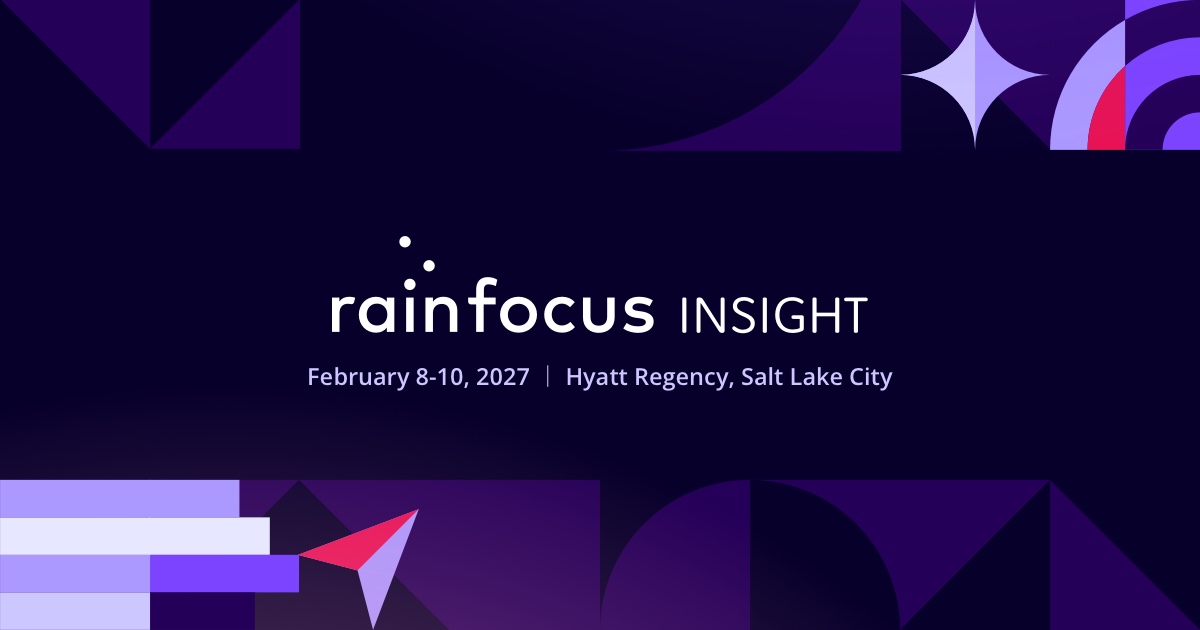
                  Feb. 8-10, 2027: INSIGHT Conference (In Person at the Hyatt Regency in Salt Lake City)

                  Our annual flagship conference brings together RainFocus users, product experts, industry thought leaders, vendors, and agencies. You’ll find learning opportunities, networking time, and fun activities.

                  Feb. 24, 2027: INSIGHT Encore (Virtual)

                  To close out the program, Rodney Hart (VP of events at RainFocus) will provide a comprehensive overview of our event performance and dig into the strategies deployed at INSIGHT. This is a great way to evaluate the potential ROI of your own future activations, programming changes, and event design choices.   

                  INSIGHT Program Highlights

                  1. Sponsor and Product Pitch Tank Sessions

                    The popular Sponsor Pitch Tank session offers attendees a lively look at sponsors’ solutions. In 2026, we also added a Product Pitch Tank to showcase some of our own product innovations, and this session received a near-perfect score. Both sessions will be back at INSIGHT 2027.

                    2. Braindates

                      Join your peers in our Braindate lounge for small group discussions about timely topics like AI implementation and event measurement. Last year, spots in these peer-led discussions filled up quickly! Stay tuned for announcements.

                      3. User Stories

                        Hear how others are using the RainFocus platform throughout the conference, from mainstage keynotes to breakouts to roundtable discussions. Attendees have said they often discover a new strategy from these sessions.

                        4. Community-Building and Prizes

                          During the conference, take part in mainstage trivia, scavenger hunts, and more. There are plenty of ways to win while building your RainFocus knowledge and expanding your network.

                          5. Expert Panels

                            Always among our top-rated sessions, these panels address the top industry challenges through engaging discussion. If you’d like to be a panelist, keep an eye on your call for papers, which will open in November. 

                            Ready to save the date for INSIGHT? Click here to add it to your calendar and stay in the loop for future announcements.

                          1. What Model Context Protocol Means for the Future of Event Marketing

                            What Model Context Protocol Means for the Future of Event Marketing

                            To fully put AI to work at your organization, you’ll need to first connect AI assistants with the tools you’re already using. The task can be complex, depending on your tech stack. 

                            Many teams rely on developers to write custom code for every single integration to enable AI to understand a platform’s data. But there is a more efficient way to set up the connection. 

                            Model Context Protocol (MCP) bridges the gap between intelligent agents and live event data — eliminating the need for multiple integrations by giving all compatible AI tools one shared language. 

                            What Is MCP?

                            To start, MCP is an open standard that lets AI agents talk directly to external systems and databases. The universal connector works across various platforms and data sources.

                            MCP Saves Event Marketers Time

                            MCP servers automatically generate a plain-language menu of available tools. AI agents can read that menu to understand exactly how to connect platforms. This enables teams to set up secure, bi-directional integrations quickly, without the need for custom development. 

                            For maximum security, MCP can be paired with enterprise-grade authentication (OAuth 2.0) to create a delegated credential system. Your team ensures AI can only access permitted functions and data without relying on static API keys. Full audit logs are included, so there’s visibility into every action taken.

                            Real-World Applications for Event Teams

                            With MCP enabled, event teams can do much more with their event data and make their teams more efficient. Here are a few use cases: 

                            • Add event engagement to your CRM. Push attendee behavioral signals, such as session engagement, meeting attendance, booth visits, or resource downloads, directly into Salesforce, HubSpot, or Microsoft Dynamics in real time.
                            • Flag incomplete profiles. Identify attendees or speakers with missing required fields, such as their bio, headshot, or contact information, before event deadlines. For exhibitors, MCP profiles can help you find out which organizations are missing their booth description, logo, or contact assignments.
                            • Validate session data. Check session records for missing abstracts, unassigned rooms, or speakers without confirmed status.
                            • Evaluate room capacity vs. registration. Compare session registrations against room capacity and flag over-subscribed sessions that may require room changes or waitlists.
                            • Track check-in status. During the event, query how many registered attendees have checked in by session, track, or time block.
                            • Trigger marketing automation from live event signals.  Instead of waiting for a post-event data dump, MCP gives platforms like Marketo or Eloqua a live read on event activity so that nurture tracks and sales alerts are activated at the right time.
                            • Unify event attribution across your revenue stack. A single protocol connecting your event platform, sales platform, marketing automation, and analytics tools lets AI agents trace the full journey, from event check-in to closed deals.
                            • Surface event intelligence inside your sales team’s existing tools. MCP lets reps query attendee engagement data directly from Salesforce, Slack, and their other familiar tools. 
                            • Enable AI to act across your full stack from a single prompt: With MCP bridging your event platform, CRM, and MAP, one instruction can identify high-intent attendees, update CRM records, enroll them in a nurture track, and alert their account owner.

                            How to Get Started With MCP

                            1. Audit your event tech stack. Not all event marketing platforms support MCP yet. If yours does not, consider prioritizing a switch to a platform that consolidates attendee behavior from all event types into a single source of truth that agents can easily query.
                            2. Loop in tech teams early. MCP dramatically reduces integration complexity, but IT needs to configure and maintain the server connections. 
                            3. Document your data permissions. Access controls are critical for success with MCP, so take time to define exactly what data each AI agent should and shouldn’t be able to touch.
                            4. Start with one use case. Rather than overhauling every workflow at once, pilot MCP with a single high-value application, such as real-time session attendance reporting.
                            5. Plan for iteration. Your first integration will surface new possibilities. Build in time to measure results and expand use cases after your initial deployment.

                            RainFocus is uniquely positioned to help organizations upgrade their AI architecture. With purpose-built agents in RainFocus Nexus, human-in-the-loop governance, and a global attendee profile that spans multiple events, RainFocus is fully equipped to support MCP. Request a demo to learn more. 

                          2. How to Sign More Sponsors for Your Small Events

                            How to Sign More Sponsors for Your Small Events

                            At large events, sponsors often need to fight for attendees’ attention in a crowd of hundreds of competing sponsors in the exhibit hall. In contrast, at a much smaller event, they might be one of just five sponsors. More organizations are realizing the particular value of small events and re-evaluating their event participation strategies. 

                            RainFocus’ benchmark data shows a 27.26% increase in exhibitor participation at events with fewer than 1,000 attendees, while larger events have seen an 11.3% decline in the number of sponsors. If you’re building your sponsorship pitch for a small event, here’s how to make the most of that momentum.

                            Present Lower Competition As a Strategic Advantage

                            At a major conference, even a well-resourced sponsor can get lost in the crowds. At a small event, they have more room to show up, stand out, and build genuine relationships with exactly the people they’re trying to reach.  When you help sponsors understand that the smaller audience can be an advantage, not a limitation, the conversation changes.

                            Rework Your Agenda to Encourage Networking

                            Event sponsors want direct access to the right people in a setting where real conversations can happen. Small events are well-positioned to deliver more opportunities for those conversations. With a tighter attendee list, every networking moment carries more weight. Building your agenda to maximize networking time creates even more value. At dedicated roundtables, structured one-on-one formats, and topic-led group sessions, sponsors can connect with their ideal customers beyond the booth.

                            Pitch Gamification As Guaranteed Engagement

                            Gamification is a reliable way to encourage more connections between attendees and sponsors. Challenges and rewards that encourage attendees to speak with sponsors increase the potential value each sponsor can receive at a small event. In our surveys, attendees have reported that gamification motivated them to spend more time with sponsors. 

                            Set Your Sponsors Up to Succeed

                            Exhibitors need to arrive with a plan to get the most out of any event, and the impact is multiplied at a small event. Encourage your sponsors to review the attendee list, identify their ideal prospects, and build personalized approaches before the event begins. They may even want to stand out with additional outreach, such as through personalized mail or other items sent to attendees. The more you support sponsors in preparing for the event, the stronger their results will be — and the more they’ll be able to make the case to return the following year. 

                            Offer Extra Value 

                            “Think about how you can provide your sponsors value in ways that go beyond the show floor,” said Adam Parry, co-founder of Event Tech Live, during a recent Event Perspectives interview with Rodney Hart, head of events at RainFocus. “Hosting a dinner is a great example.”

                            Events like a hosted dinner or cocktail party give sponsors more value beyond the standard agenda through time to continue building relationships with attendees in a more casual setting. With these opportunities built into your sponsorship packages, sponsors will be more likely to invest more deeply in your event and your attendee community.  

                            Ready to build a sponsorship strategy around your smaller events? Start with the RainFocus Base Module. Learn more here.

                          3. Virtual Event Platform Selection Considerations: Data Capabilities and AI Maximize Engagement

                            Virtual Event Platform Selection Considerations: Data Capabilities and AI Maximize Engagement

                            While flagship in-person events reign supreme for creating memorable experiences and forging business relationships, virtual events remain an important event portfolio component.

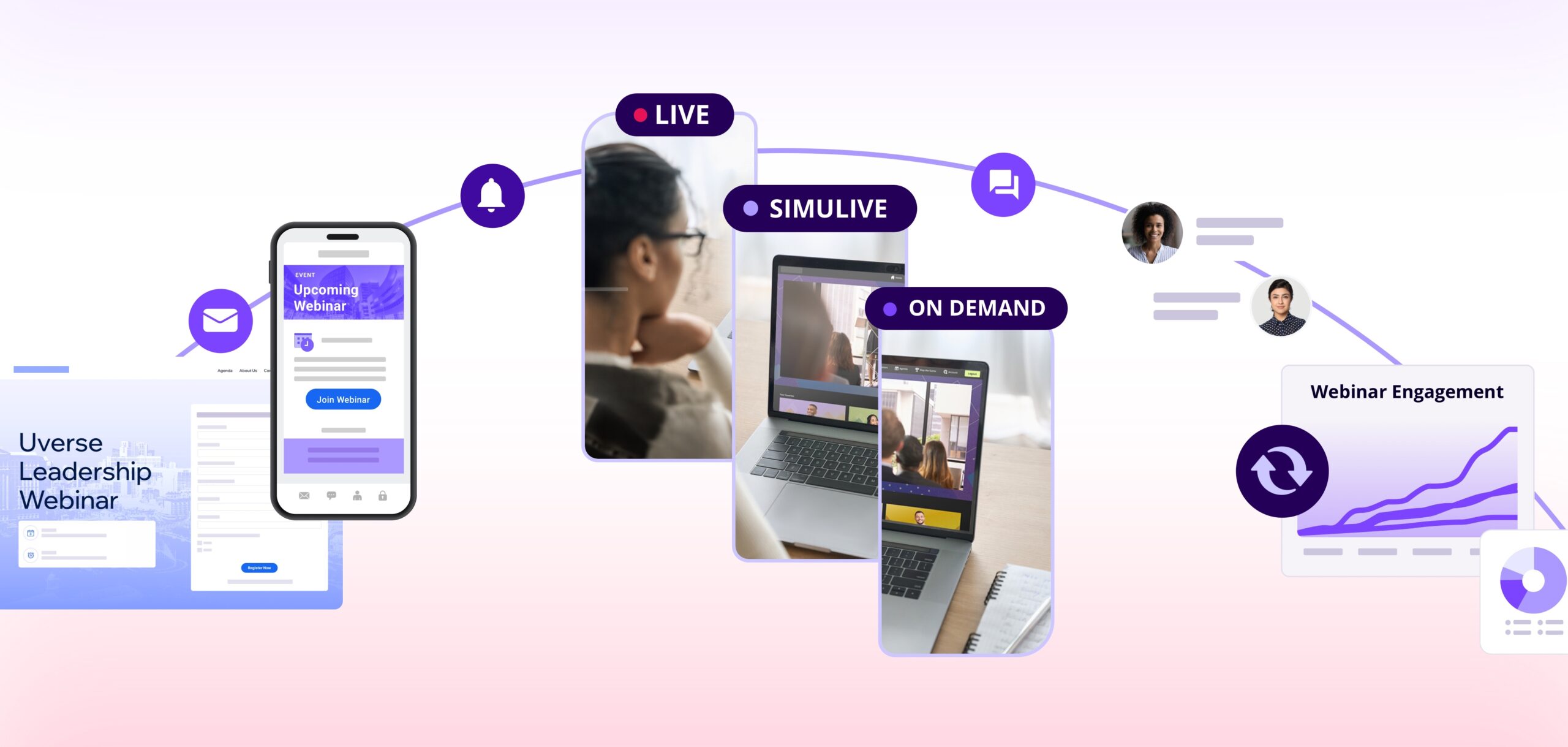
                            Plus, with their scalability and lower barriers to access for attendees, webinars and other types of virtual events help expand audiences and power a continuous engagement strategy throughout the year. As these events nurture leads, expand reach, educate prospects and customers, and support other goals, they serve as an ideal complement to in-person events. 

                            For a virtual event to deliver on that value, the data that it produces must be comprehensive and readily available. Capturing attendee data across an event portfolio and putting it to use to inform sales and marketing strategy has long been core to the RainFocus platform for all event types. 

                            RainFocus named a Leader

                            Most recently, we were excited to see that RainFocus was named a Leader in The Forrester Wave™: Virtual Event Management Platforms, Q2 2026

                            The report evaluated 12 virtual events management platforms on their current offerings, strategy, and customer feedback to determine rankings. RainFocus received the highest possible scores in 22 of the 31 total criteria measured. The criteria included sales and marketing technology integrations, experience personalization, surveying and feedback collection, and many more. 

                            “Superior capabilities across multiple areas help clients deliver large-scale, highly customized virtual and hybrid events,” the report said. “It offers excellent data capture capabilities and global attendee profiles to personalize experiences. The platform is augmented by deep CRM/MAP/customer data platform (CDP) integrations, including multiple native connectors to the Adobe ecosystem.”

                            Why first-party data matters

                            The integrations and connectors bring increasingly vital data into an organization’s tech stack.

                            “As third-party data declines, virtual events are becoming a critical source of first-party buyer insight,” the report stated. “Buyers should evaluate how well vendors capture, unify, and activate data at the individual, account, and event program level.”  It also described the evolution of virtual events into “scalable data and engagement engines.”

                            In addition to fueling business outcomes and demonstration event ROI, attendee data also supports personalization and differentiated event experiences. 

                            The Forrester Wave report noted that virtual event attendees “value meaningful personalization including timely content recommendations and intelligent networking rather than passive participation.”

                            AI advances have made strategies to meet these demands more scalable and sophisticated. RainFocus Nexus, an advanced agentic AI layer in the platform, orchestrates real-time engagement for every interaction. New agents within RainFocus Nexus are steadily joining the lineup to streamline every step of event planning and execution, while amplifying data impact within a secure ecosystem that works with an organization’s existing AI tools. 

                            High-performing webinars

                            Our Events and Marketing Strategy Survey found that webinars are the second fastest-growing event type. The attendance rate for webinars has increased 9% over the last year. 

                            Given this growth, we recently highlighted best practices for getting the most out of your webinars and other virtual events.

                            These included prioritizing seamless integrated experiences, ensuring integrated data, and strategizing for maximum content value and engagement after the initial event.

                            Best practices for high-performing webinars start with building the event in the right event platform. During the vendor search, we recommend consulting the latest objective third-party research reports like The Forrester Wave™: Virtual Event Management Platforms, Q2 2026. Access a complimentary copy of the report here.

                            Forrester does not endorse any company, product, brand, or service included in its research publications and does not advise any person to select the products or services of any company or brand based on the ratings included in such publications. Information is based on the best available resources. Opinions reflect judgment at the time and are subject to change. This report is part of a broader collection of Forrester resources, including interactive models, frameworks, tools, data, and access to analyst guidance. For more information, read about Forrester’s objectivity here .