Blog

  • Events Industry 2023, Wrapped: Our Top 10 Most Popular Blog Posts

    Events Industry 2023, Wrapped: Our Top 10 Most Popular Blog Posts

    As we close the door on 2023 and prepare to launch into what will undoubtedly be another busy year in the events industry, we’re excited to take a look back. Throughout the year, the RainFocus blog has helped event leaders stay ahead of the curve. We provide thoughtful advice from our seasoned executives on the most impactful trends, as well as quick practical tips for navigating the day-to-day work of planning and executing events around the world. 

    To cap off our journey through the year, we’re counting down our top 10 most popular blog posts in 2023. Join us as we revisit these highlights and the trends that defined the year in the events industry: 

    10. Everything You Need to Know About Badge Printing

    Event success comes down to the details. To the uninitiated, badges may seem minor compared to elements like booking keynote speakers or planning a massive welcome party. But attendee badges perform a critical function. Is pre-printing or printing on demand more efficient? How should you differentiate access types? This quick guide helps your team zero in on the right choices.

    9.  The Path Forward: JR Sherman and Alicia Tillman Reflect on Pandemic Pivots and Events’ Value in Any Economic Climate 

    RainFocus INSIGHT gives attendees expert guidance on the most important events industry trends, opportunities, and challenges for the year. This blog post recapped the fireside chat between RainFocus CEO JR Sherman and Alicia Tillman, RainFocus board director and current chief marketing officer at Delta Air Lines. No matter the size of your company or your events, these experts’ reflections on customer journeys, budgets, the future of virtual events, and more continue to resonate.

    8. Early Bird Pricing Strategy: The Logic and Science Behind Scarcity and Value

    Another evergreen favorite, this post dives into the strategy behind offering early-bird pricing for your event. With events under pressure to deliver ROI and meet attendance goals, it’s more important than ever to hit the ground running with a strong response to your special offers for attendees who register early.

    7. Conversations: A Look at Today’s Event Trends with Ashleigh Cook 

    The Conversations series, a signature part of the RainFocus blog, features candid Q&A sessions with RainFocus’ most knowledgeable executives. This 2022 post with Ashleigh Cook, now our CMO, zeroes in on opportunities and challenges that continue to factor heavily into events leaders’ planning. Readers found valuable advice on everything from attendee engagement to smart content reuse to ongoing efforts to increase personalization.

    6. Fifteen Points of a Great Recap Video

    After an event wraps, it’s time for measurement, analysis, marketing and sales follow-up … and putting together a fun recap video to showcase your success and keep the enthusiasm going. Readers appreciated the detail in this blog post and the provided client examples.

    5. How to Structure Cancellation Fees at a Conference

    Like badge printing, early-bird pass offers, and recap videos, cancellation fees represent another event element that may seem minor but can have a big impact. Balancing ongoing relationships with financial realities — and making the whole process as efficient as possible — requires the right approach. This popular blog post covers all the nuances.

    4. What Should You Look for in a Modern Event Management Platform?

    When exploring options for any new technology, buyers often turn to leading analyst firms’ reviews and reports comparing leading platforms. This year, Forrester compared RainFocus and 13 competitors for The Forrester Wave™: B2B Event Management Technology, Q1 2023 report, and we were named a Leader. But this popular blog post is about more than boasting — it also lays out a few key recommendations from Forrester’s analysts for what to look for in any B2B event management technology.

    3. How to Supercharge Your Marketing Channel With Event Data

    Omnichannel marketing is making big waves this year in the events industry, so it’s no surprise that this blog post ranked near the top in popularity. The end of third-party cookies, meanwhile, has spotlighted the importance of zero- and first-party event data like never before. Best of all, we also co-wrote an entire (free!) e-book with Adobe if you’re ready to take the next steps.

    2. A First Look at RainFocus INSIGHT 2024: What to Expect 

    It’s clear the excitement around RainFocus INSIGHT continues to build! Since this post was first published, we’ve also released a lot more information about the event. Check out the session catalog and preliminary speaker list, bonus excursion offerings, and more. There’s still plenty of time to get the primer through this blog post and then register to join us in Salt Lake City.

    1. How to Harness the Power of Events to Drive Business Growth 

    Finally, our most read blog post in 2023 — by far — tackles a universal, timely theme. Whether or not your organization faced budget cuts and other economic challenges this year, turning to your events channel to fuel marketing and sales success is a smart strategy. Our experts delved into exactly how to make sure those events deliver maximum (and measurable) ROI. For even more guidance, check out the accompanying free e-book!

    We’re looking forward to another year of bringing you another year of thought-provoking discussion and practical guidance on the blog. We can’t wait to see what 2024 brings!
  • Advancing Your Event Career in the Age of Agentic AI

    Advancing Your Event Career in the Age of Agentic AI

    Although AI agents cannot replace the human leadership of events, they are becoming increasingly more important for managing events. During the recent RainFocus INSIGHT 2026 conference, our speakers emphasized that professionals who master AI-powered technologies will advance in their careers, while those who cling to legacy systems and processes will lose their edge. 

    Event industry leaders at INSIGHT discussed the impact that AI will have on event careers and what event professionals should do now to climb the corporate ladder during this monumental shift. Here are the top three recommendations for growing your career in the age of agentic AI:

    Create an AI-Powered Workforce 

    If it isn’t already, AI will soon be integrated into your daily routine. Taking command of AI agents is the key to advancing your event career, explained Marius Milcher, VP of platform strategy and AI at RainFocus. 

    “By letting AI handle mundane tasks like drafting abstracts or managing schedules, you free up your time to focus on human connection, creativity, and strategy,” he said during an INSIGHT session. Use AI to solve big challenges, not just small ones. For event professionals, experimenting with AI for tasks like building schedules or sending recommendations demonstrates the forward-thinking leadership needed to get ahead in your career.

    Strategize Like a C-Suite Member

    Because AI is capable of streamlining event execution, business strategy becomes more important. The key to becoming a strategic advisor requires framing conversations with C-suite members around business trade-offs, risks, and impacts rather than event technology, said Nicola Kaster, CEO of Event Leaders Exchange. 

    Similarly, INSIGHT keynote speaker Sasha Frieze, author of the Chief Event Officer’s Playbook, recommended that event professionals investigate what their CEO cares most about (e.g., product launches, renewal cycles) and then design events specifically to support those goals.

    Master the Art of Gathering and Sharing Data

    To think like a C-suite member, you’ll also need to capture the right data. During our industry expert forum, several panelists mentioned the importance of determining return on objective. For events, this means moving beyond vanity metrics like registration numbers and focusing on pipeline influence, deal acceleration, and customer retention. To capture these data points, set up integrations with your CRM and marketing automation platforms. Once you’ve established a bi-directional flow of data, you can give your leadership compelling proof that your event is driving business and, in turn, illustrate your value as an employee.

    AI can make these processes much easier. RainFocus Nexus agents enable strategic collaboration with the company’s leadership team by surfacing important event metrics at a moment’s notice. With this data, you can inform sales and marketing of event-generated opportunities, which directly impact closed-won business. 


    Read more about RainFocus Nexus here or request a demo for more information. For more INSIGHT content, visit RainFocus On Demand.

  • INSIGHT Strategy Scoop: A New Way to Streamline Staff Scheduling

    INSIGHT Strategy Scoop: A New Way to Streamline Staff Scheduling

    All hands on deck! As an event approaches, organizations often turn to one of their most valuable on-site staffing resources: internal employees from the events team and beyond. 

    To make the most of their time at the event, employees often pitch in for the myriad on-site roles needed for successful event execution. They may be asked to distribute badges, scan booth visitors, monitor breakout session seating availability, support audience Q&A operations, or even spin the prize wheel at the gamification station. 

    Plus, with their knowledge of your organization’s latest offerings and pride in the company, employees are natural ambassadors. They make attendees feel connected and can effortlessly answer questions. Event leaders depend on these “temporary staffers” to fill in operational gaps and bring their events to the next level.

    But what’s the best way to get everyone signed up for shifts … without drowning in spreadsheets? How can you avoid time conflicts? What are the secrets to ensuring employees show up for all of their shifts over the course of a busy event?

    The Dreamforce inspiration

    As part of the “Behind the Scenes” series at RainFocus INSIGHT 2026, our own configuration experts and other team members shared an insider perspective building the innovative new staff scheduling solution they debuted this year at INSIGHT. 

    The previous approach to employee scheduling at INSIGHT was built on spreadsheets, which presented limitations and required significant ongoing manual work.

    “The spreadsheet might not have always shown the most up-to-date version,” noted Kristi Nybro, principal project manager at RainFocus. “And people did not have their scheduled sessions appear as shifts on their calendar, so a lot of them needed to have reminders sent.” 

    With the RainFocus platform already serving as the source of truth for event content and other core scheduling elements, using it for staffing instantly made sense for providing a seamless operation. 

    Better yet, Salesforce had already successfully run its internal staffing within the RainFocus platform at its massive Dreamforce event. A post-Dreamforce learning session with the Salesforce team gave Nybro and her colleagues an informative jumpstart on building something similar for INSIGHT. 

    Staffing “session” buildout process

    The scheduling system used RainFocus’ existing session catalog functionality, with each employee shift built as a “session.” 

    Each employee could view available shifts organized by date and time and apply filters to see which still needed to be filled, explained Usamah Rao, solution consultant at RainFocus. 

    This setup not only made signup easy, but it also ensured work shifts appeared alongside session attendance and other INSIGHT commitments in each person’s agenda to prevent accidental double-booking. 

    “The process was about using the tools we are already using,” added Gabe Fernandez, senior solution consultant at RainFocus. “There was nothing new to learn, and everything was in one place, with no need to manage multiple spreadsheets anymore.” 

    Whether a shift was individually selected or pre-assigned (e.g., by a manager), it was automatically populated into the employee’s daily agenda and mobile event app for quick viewing on-site. 

    Quick deployment tips

    Building the staffing system within RainFocus offered plenty of built-in advantages, as seen by Salesforce and our own team at each organization’s respective events. 

    But regardless of the platform, here are a few guidelines to start streamlining employee staffing sign-ups and on-site operations at your next event: 

    • Include layered access safeguards. When staffing sessions are built the same way as regular content sessions open to attendees, it’s important to make sure only employees can see them. The RainFocus team used widgets with filters, attribute values, and employee-limited visibility to maximize security. Session catalogues for non-employee attendees contained only the expected menu of sessions for a clean, confusion-free experience
    • Share the dashboard with people leaders. Once initial shift sign-ups are launched, keep managers in the loop. An automatically updated dashboard can show them which days and tasks still need the most staffing. It can also list which of their direct reports attending the event have not yet volunteered where needed. 
    • Make “Add to Calendar” easy. An email confirmation with a universal .ical file helps employees continue to prioritize shift attendance. You’ll increase the chances that everyone shows up as planned, even as their event agendas inevitably become more jam-packed as the event nears.
    • Send day-of reminders. Finally, timely reminders for shift attendance — through emails, mobile push alerts, or a combination of both — tame on-site schedule chaos and provide that last gentle enforcement step. Staffers reminded of their commitments can make sure to avoid scheduling last-minute meetings or other activities over their critical duties for helping make the event a success.

    If you couldn’t make it to INSIGHT this year or want to revisit the key learnings, here’s a quick recap of the most important takeaways.

    Better yet, we’ve made select sessions available free. Log in here to browse at your convenience. 

  • How Will Events Change in the Next Three Years? Six Predictions From INSIGHT

    How Will Events Change in the Next Three Years? Six Predictions From INSIGHT

    “In the next three years, so much will change,” said Brent Turner, EVP of Strategy and Solutions at Opus Agency. During his keynote session at INSIGHT, Turner and Brian Gates (SVP of Go to Market and Strategy at RainFocus) outlined six shifts that will shape events in the coming years. Using a metaphorical concept car, they showcased what is possible when event professionals embrace change. 

    Here are the biggest predicted changes, and tips on how event marketers can prepare for each shift:

    1. The Live Rush

    The shift: The third space is back, meaning people are flocking to meetups, coffee shops, and clubs. As a result, events have more competition for people’s time. 

    How to prepare: Gates explained the importance of becoming “value obsessed” in your marketing to capture a customer’s attention. The new benchmark for success is a return on engagement, measuring offline engagement with the same speed and accuracy as online data.

    2. New Opportunities in the Global South

    The shift: Global growth is shifting; within four years, nine of the ten largest cities will be in the global south. This means the total addressable market is moving, requiring portfolios to further expand into regions like the Middle East, Latin America, and Southeast Asia.

    How to prepare: Event marketers must develop an infrastructure for growth and automate systems to run experiences in these local geographies. They must provide a sense of belonging to local audiences while minimizing time-consuming extra work for each city.

    3. The “Stakeholder Economy”

    The shift: People are replacing traditional institutions with brands to find their sense of purpose and identity. Because individuals are investing their identity in these brands, their expectations are increasingly high.

    How to prepare: To keep up, event marketers need to bridge the gap between their business and audience needs, to ensure the experience continues seamlessly after the event ends.

    4. A Greater Desire for An Interactive Life

    The shift: Attendees want more interactive experiences, especially moments that cannot be recorded or summarized by AI. “If an event can be fully experienced via a transcript, it doesn’t need to be live,” Turner said. 

    How to prepare: Intentionally supporting spontaneity and tactile experiences will help you increase event value in the coming years. A focus on collaboration and networking separates great events from mediocre events. 

    5. Audiences’ Expectations for Connected Experiences

    The shift: Attendees have come to expect personalized recommendations based on interactions they’ve had with companies in the past. 

    How to prepare: Event marketers can use predictive modeling and agentic AI to surface ideal content or connections, and then recommend them to an individual.

    6. The Machine Layer (AI)

    The shift: We are moving to a “bot-to-bot” B2B environment in which AI agents act as personal assistants, handling manual work like booking and scheduling. As more events implement this type of concierge experience, attendees will come to expect it at every event.

    How to prepare: Begin using agentic AI, such as RainFocus Nexus, now. Set up a workforce of AI agents to solve attendees’ needs on your behalf and focus on high-value activities like building connections.


    To watch the entire session on demand, visit rainfocus.com/insight.

  • Five Key Themes From RainFocus INSIGHT 2026

    Five Key Themes From RainFocus INSIGHT 2026

    During INSIGHT Encore, the final event in our INSIGHT 2026 event series, RainFocus VP of events Rodney Hart remarked, “This year was our best yet!”

    INSIGHT Encore features highlights from INSIGHT, discussion of the biggest industry themes that emerged, and statistics on the event’s performance. From overall attendance to business impact, INSIGHT 2026 proved compelling — and we received 13% more positive feedback from attendees this year.  

    Let’s dive into a few of INSIGHT’s key themes and most exciting announcements: 

    1. Agentic AI Eliminates Friction for Events Teams and Their Attendees

    RainFocus executives announced RainFocus Nexus, RainFocus’ new agentic AI, on day one of INSIGHT. RainFocus Nexus uses specialized agents designed to handle everyday tasks that event marketers and their attendees face. The speakers noted that AI can handle unstructured data and layer in context, allowing event professionals to focus on strategy. To further emphasize the impact, a mainstage exclusive led by Salesforce demonstrated real-life examples of how agentic AI can reduce friction and delight attendees.

    2. Unifying Data to Eliminate Silos

    The rise of agentic AI has made it even more important to dismantle data silos to create a single source of truth. Several client sessions at INSIGHT praised the unified nature of the RainFocus platform. “Everything we do starts, stops, or runs through RainFocus,” said one speaker. Disparate tools lead to fragmented customer journeys. The RainFocus platform unifies these data streams, ensuring that sales, marketing, and event teams operate from the same dataset. RainFocus Nexus brings the positive impact to the next level.

    3. Templatization and Governance As the Foundation for Scalability 

    Since the release of our Base Module, many customers have gained new efficiencies by templatizing their events — adding several smaller, localized events to their event programs. Several clients led case study sessions showcasing how they leveraged RainFocus templates to achieve greater governance and scalability without sacrificing quality. In addition, Adobe integrations earned several mentions for increasing efficiency.  

    4. The Shift From Content Consumption to Community Connection

    Event industry leaders repeatedly noted shifts in attendee expectations: People attend events primarily for connection, not just content. “Humans are meant to build communities, not exist in crowds,” explained Naomi Clare Crellin, CEO of Storycraft Labs, during a session. Fostering belonging and psychological safety promotes this community. Similarly, Workday presented a session on its “Rising Signs” campaign, which used personality archetypes to foster peer-to-peer connection. Throughout INSIGHT, we also used popular Braindates to create intentional, participant-led networking opportunities.

    5. Unlocking the Content Supply Chain

    Last but certainly not least, several speakers offered strategy tips on building a high-quality content supply chain by repurposing event content for downstream marketing and sales use. Valuable event content is often under-utilized. But through our partnerships with platforms like Adobe and Workfront, RainFocus has automated the flow of session data and assets into broader marketing ecosystems (like Adobe Experience Manager). This connection makes it easier to build continuous engagement and ROI long after the event concludes.


    These are only a few of the big trends from INSIGHT. Want to revisit conference sessions or catch up on any that you missed? Visit RainFocus On Demand to learn more.

  • "AI Will Accelerate Human Engagement": RainFocus Nexus Debuts at INSIGHT 2026

    “AI Will Accelerate Human Engagement”: RainFocus Nexus Debuts at INSIGHT 2026

    As event teams increasingly adopt AI tools, the power of events will further soar, RainFocus executives predicted. 

    The genuine connections forged at events foster trust and authenticity. These sentiments and the memorable experiences surrounding them translate into positive business relationships and provide a human-centric counterbalance in an AI-driven world.

    While AI can’t replace events or the people who create them, it can certainly make their jobs easier, said RainFocus CEO JR Sherman during the opening keynote presentation at RainFocus INSIGHT 2026.   

    “AI will accelerate human engagement,” he explained. “It’s about removing friction from your job and your organization, eliminating redundant tasks and giving you more time to think strategically about connecting journeys.” 

    To that end, Sherman and his co-presenters — fellow RainFocus executives Doug Baird (founder and president) and Marius Milcher (VP of platform strategy and AI) — unveiled RainFocus Nexus, the eagerly anticipated intelligent collaboration system for event marketing workflows.

    Specialized AI agents

    RainFocus Nexus adds a proprietary orchestration and context layer to the RainFocus platform to empower specialized AI agents that act as teammates to event marketers, planners, and sales reps. 

    “We have always provided that ‘solid ground’ for your event data,” Milcher said. “Today, we are showing a fundamental step change in event orchestration. We aren’t just giving you better tools. We are giving you an augmented workforce.”

    First, the context layer within RainFocus Nexus serves as the underlying intelligence layer to translate raw data into operational intuition based on event program requirements and attendee sentiment.

    “This layer understands that ‘messy middle’ in event execution,” Milcher noted. It helps teams more readily understand data and get information in real time, enabling faster and more informed decisions.

    In the orchestration layer, agents turn the understanding from the context layer into immediate, precise actions. Ultimately, they help bridge the gap between event planning and execution throughout the event lifecycle. 

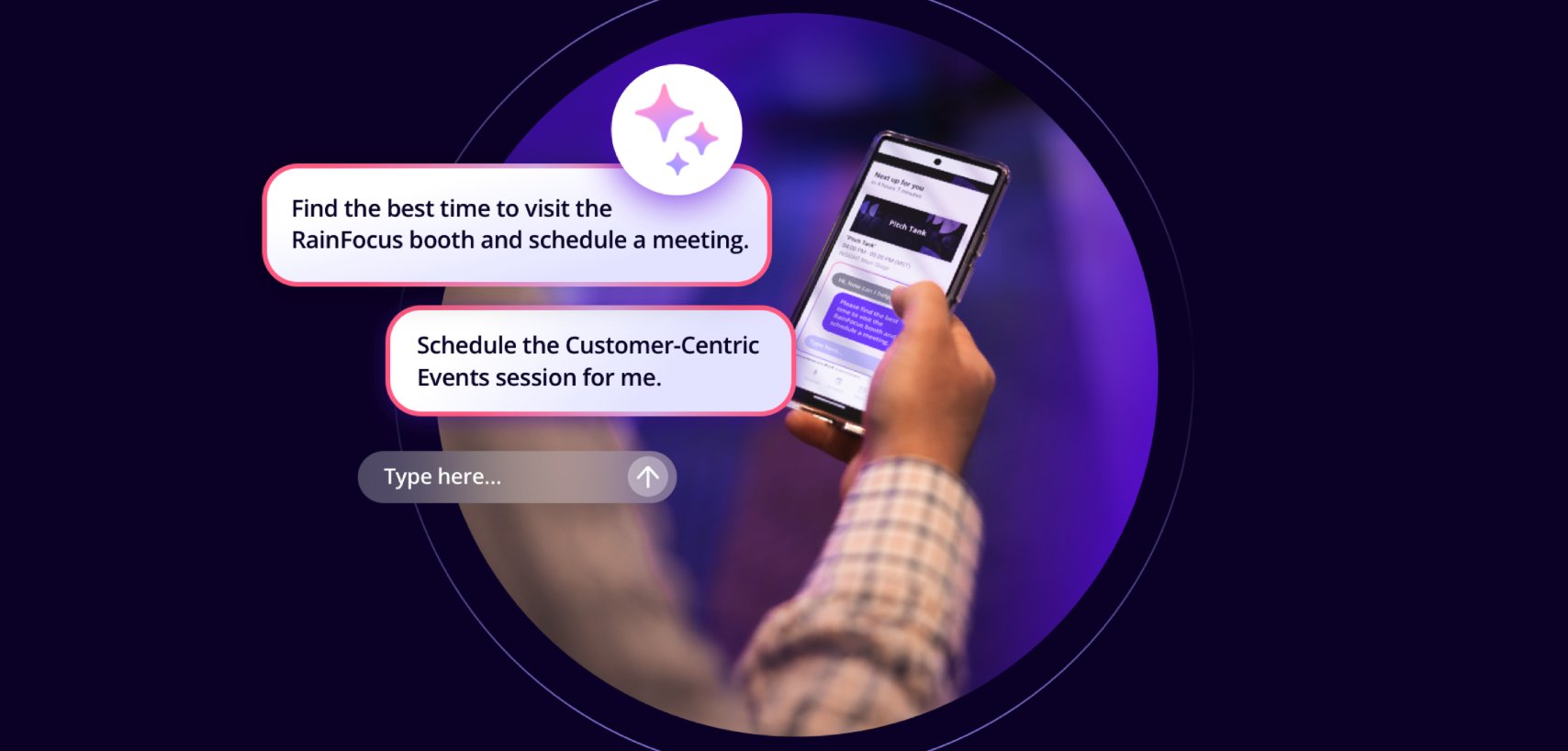
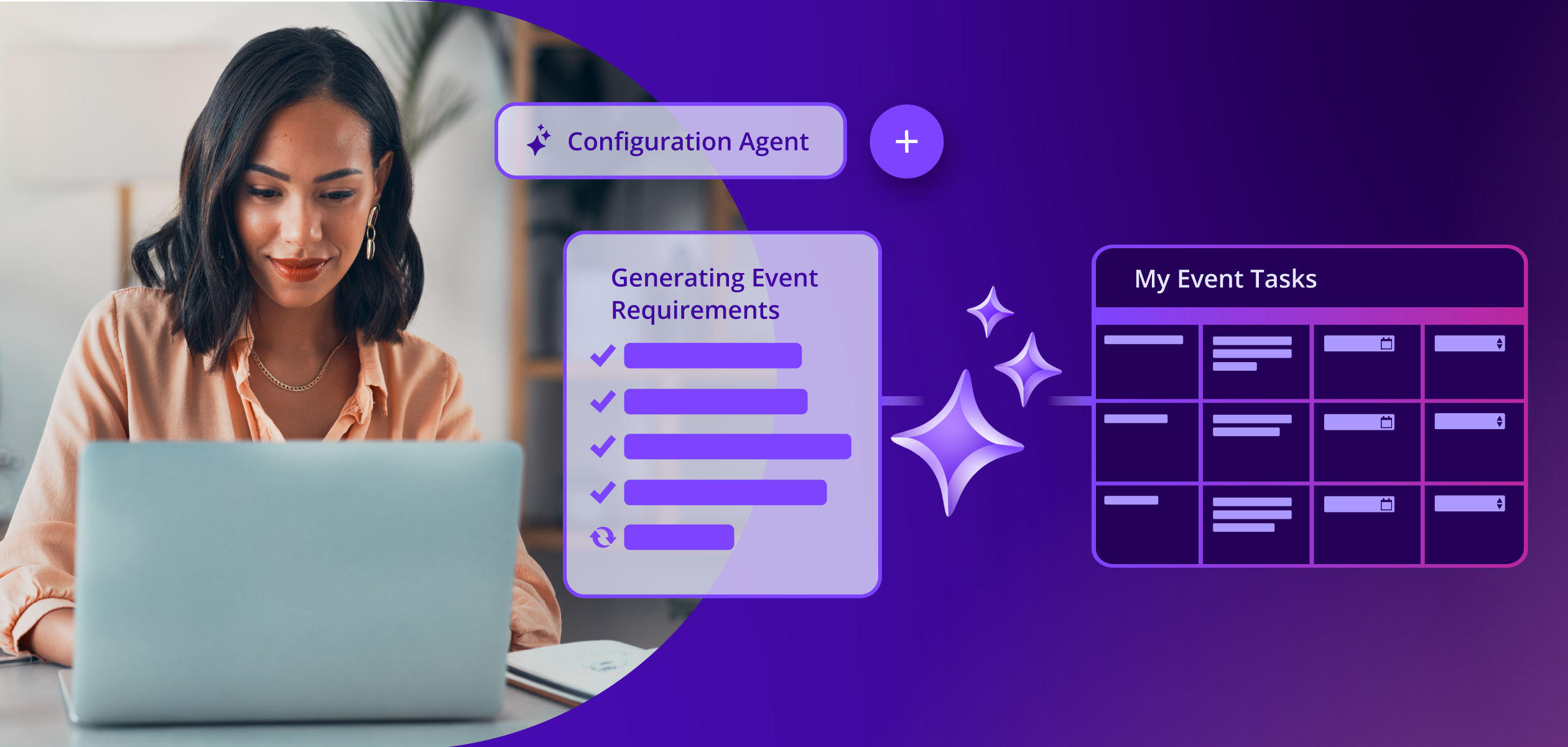
    Two agents are now available for select RainFocus clients: The Configuration Agent, which automates setup workflows and can cut launch time in half, and the Concierge Agent, which serves as attendees’ personal guide to provide front-line support and enhance their event experience.

    Data security and future features

    These agents will soon be joined by several additional “teammates.” RainFocus’ product teams are hard at work finalizing the next three agents within the orchestration layer. 

    Milcher offered a sneak preview of each of these three agents: Growth Agent, which accelerates pipeline for marketing and sales; the On-Site Agent, which supports event ops through instant metrics and decisionmaking guidance; and the Integration Agent, which orchestrates data connectivity between events and the rest of the organization’s tech stack.

    Of course, security and privacy are paramount throughout the system.

    “Clients trust RainFocus because of our security, and that has fundamentally informed how RainFocus Nexus is built,” Milcher said. “PII protections and governance are built in, and our cloud-agnostic approach allows you to run your own hardware as necessary.” 

    RainFocus Nexus is already creating a buzz at INSIGHT. In the spirit of its bold new approach, Baird closed the keynote by encouraging attendees to embrace the future and unfamiliar technologies that may initially feel intimidating, and to seek out new people to meet at INSIGHT over the next few days. After all, human-to-human connection is both the present and the future!

    Learn more about RainFocus Nexus here.

    Stay tuned for more coverage of all of the biggest announcements and expert strategy discussion coming out of our flagship event.

  • Previewing INSIGHT 2026 Sessions You Won’t Want to Miss

    Previewing INSIGHT 2026 Sessions You Won’t Want to Miss

    Whether you’re just learning about RainFocus or you’re already running hundreds of events on the platform right now, RainFocus INSIGHT is your must-attend event for learning about the most important industry trends and best practices in event management. 

    During our INSIGHT Premiere event last month, we unveiled our INSIGHT 2026 conference agenda, filled with inspiring keynotes, case studies, and roundtable sessions. 

    The main INSIGHT event is coming up fast: Jan. 20–22 in Salt Lake City. As it draws closer, we’ve highlighted a few sessions that are already proving especially popular: 

    Keynotes

    Connecting Journeys

    Our opening keynote session will provide attendees with an overview of all that RainFocus has accomplished with customers and partners in 2025 and previews of the product features coming in 2026. The speakers for this session include RainFocus executives JR Sherman, Doug Baird, and Travis Cushing from RainFocus, alongside special guest Kenneth Marzin from Deloitte.

    The Future Vision of Events

    Imagine the “concept car” of events. Brian Gates, SVP of Industry Strategy at RainFocus, and Brett Turner, EVP of Strategy and Solutions at Opus Agency, will discuss the future of event management. See how the technologies in development today will shape tomorrow’s events.

    The Chief Event Officer’s Playbook

    Renowned event strategist and author Sasha Frieze will debut her new book The Chief Event Officer’s Playbook at INSIGHT. In this session, you’ll get a preview of Frieze’s 10-step model for creating transformational events. Complimentary copies of the book will even be available.

    Mainstage Exclusive

    Veteran INSIGHT speakers Julia Cornish and Scott Allan will be back by high demand this year to share how they’ve used Salesforce’s agentic AI to power conversations with over 47,000 attendees at Dreamforce 2025. After their dynamic breakout sessions drew overflow crowds last year, we’ve decided to bring this dynamic duo to the mainstage so that everyone can hear about the Salesforce team’s incredible accomplishments.

    Case Studies

    INSIGHT will feature more case studies than ever. Learn how clients are making the best use of RainFocus features and approaching a range of event elements: 

    • The multi-event container app
    • Staffing
    • Registration
    • CRM-driven personalization
    • Branding 
    • Templatization
    • Event safety
    • Live tables
    • Session, attendee, and exhibitor attribution

    “Share and Compare” Roundtables

    INSIGHT will close with these can’t-miss roundtables. You’ll learn how others are using the RainFocus platform and share your own solutions with your peers. This is also a chance for attendees to gather and discuss everything they’ve learned throughout the conference.

    Discussion topics include RainFocus’ key elements: 

    • Mobile app
    • Event templates
    • Attendee Module
    • Content Module
    • Exhibitor Module
    • On-site technology 
    • Gamification

    Spots in these INSIGHT sessions and others are filling up quickly! If you haven’t registered yet, secure your pass today and begin adding sessions to your catalog. View our complete session catalog on our website.

  • INSIGHT Premiere Recap: Event Leaders on AI, Good Data, and Finding Time for Innovation

    INSIGHT Premiere Recap: Event Leaders on AI, Good Data, and Finding Time for Innovation

    Everyone’s talking about AI and its potential for transforming events. But which strategies have proven the most popular? What’s holding some organizations back from deeper AI deployment? And which measurement fundamentals are the most important?

    At INSIGHT Premiere earlier this week, two industry experts joined RainFocus CMO Ashleigh Cook and RainFocus CTO Mike Bushman for an in-depth panel discussion. 

    Brent Turner — EVP, strategy and solutions at Opus Agency — and Nicola Kastner, CEO, Event Leaders Exchange (ELX) — shared their own success stories with AI deployment and offered candid advice on upskilling, measurement, relationship-building, and much more. Here are just a few of their top takeaways:

    Event teams still have plenty of room to grow with AI implementation.

    Kastner presented research showing that although 69% of event leaders surveyed by ELX said their teams are using AI, a great deal of potential remains untapped. 

    “Many organizations are just scratching the surface so far,” she said. “They’re using AI for simple tasks, like writing, researching, or doing admin work, not strategy or analysis or deep dives. AI can drive a lot of innovation. We have to think about it as a tool and partner.”

    The panel cited upskilling team members, as well as ensuring data privacy and IP protections to keep inputs safe, as key steps for removing common obstacles to fuller AI deployment. Busy teams also might need to simply prioritize pausing between events and devoting time to creating innovative approaches to stay competitive internally and externally.

    Event data and the right approach to measurements are more important than ever.

    AI deployment success requires trustworthy, consistent, accessible data. This reality highlights the imperative for event teams to do more with their data. They also must be able to readily share it across their tech stack across the entire event lifecycle. 

    “Event professionals need to be able to understand data,” Kastner stressed. “They need to know what it means, and what levers they need to pull to shape an outcome. Data builds accountability for the organization. Measurement and data fluency are critical.” 

    Turner even encouraged event leaders to shift their whole framework around measurement to better suit the unique role that events play — and the power that they hold within sales and marketing pipelines. 

    “You cannot just apply the same type of channel measurement to events like they’re another part of marketing,” he explained. “An event is a product. That mental shift changes the entire event KPI dashboard.”

    Don’t forget the true stakeholders.

    Finally, the panelists emphasized that technology, innovation, and AI can’t replace the real-life relationships and experiences that attendees crave at events. 

    Attendees don’t come to an event because of executive egos,” Kastner reminded the audience. “Designing for the attendee journey is very important.”

    “The stakeholder is not your boss,” Turner said. “The real stakeholder is the attendee.” He recommended always answering the simple question, “Why does this event exist?” and aligning each event with specific audiences or pipeline goals. 

    Even amid rapid change with AI and other developments, the core appeal of events remains. Regardless of each event’s specific purpose, it’s a time to tell the organization’s story to an engaged audience, Bushman said. 

    “Events are unique,” he said. “When else do attendees have that time away from their bosses? They aren’t walking around with laptops, and they’re not distracted. Being front and center is a huge opportunity.”

    If you missed the panel discussion or want to revisit it, we’ve made the full video available to watch on demand here.

    And INSIGHT Premiere is just the beginning! Register for INSIGHT today to join us for the rest of the exciting program.

  • How to Incorporate Event Networking Into Every Stage of the Customer Journey

    How to Incorporate Event Networking Into Every Stage of the Customer Journey

    Networking continues to be one of the most important parts of events. In the last three years that we have conducted our Events and Marketing Strategy survey, the vast majority of respondents have indicated plans to increase the amount of networking time at their events. 

    Respondents also say they are dedicating more space throughout the venue to networking. This recurring trend shows the value of human connections and building relationships at events. 

    Your approach to networking at events should span the entire buyer’s journey. In our last blog post on networking, we introduced effective event strategies for helping attendees network. In this post, we’ll discuss how event networking fits into broader journey-based marketing and suggest ways that the events team and marketing team can work together to maximize the value of networking interactions. 

    The Importance of Journey-Based Marketing

    The time that an attendee spends networking at an event is a pivotal part of their customer journey. They form authentic connections with your brand ambassadors and gain trust in your products and services. Different types of events have particular appeal for buyers at each stage in the buying cycle. At all events, offering ample networking time helps your organization’s reps become genuine influencers early in the journey, rather than unknown sellers. 

    Awareness Stage

    In addition to your own events, time spent at industry events held by others should be considered a vital part of the networking strategy. Conversations among attendees often first make new buyers aware of an organization and its offerings. Sending representatives to industry events, whether you have a dedicated booth or not, has always been an impactful marketing tactic. For your own events, consider expanding the reach and building awareness by enabling attendees to share their plans to attend your event(s) on social media. Another effective way to boost awareness (and attendance) is through group packaging. 

    Consideration Stage

    During this stage, events can help nurture leads. By inviting prospects to attend your webinars or regional events, you give them an opportunity to naturally interact with your team, ask questions, and learn about your offerings. Events that are close to home are ideal for the consideration stage as they don’t require much effort on behalf of your prospects. As they form deeper relationships with members of your team, they’ll be more likely to move into the decision stage. 

    Decision Stage

    In the decision stage, event networking can reassure customers that purchasing your products or services is the right choice. They can get specific questions answered by on-site experts and talk with current customers. Building solid relationships even before contracts are signed will help your soon-to-be customers feel that they can rely on your team whenever they need help.  

    Driving Upsells Post-Purchase

    The power of networking isn’t limited to prospects. Networking events such as user conferences or exclusive meetups can help strengthen the relationships you have with existing customers and encourage upsells and loyalty.
    As you prioritize these strategies for building human connection, you’ll gain attendees’ trust and devotion, ultimately turning them into long-term brand advocates. Learn how RainFocus enables companies to offer networking at events by visiting our networking page.

  • Streamlining Sales Meeting Success: Inside RainFocus' Latest Enhancements

    Streamlining Sales Meeting Success: Inside RainFocus’ Latest Enhancements

    Events bring people together, building and deepening business relationships. In addition to the typical hosted networking activities, after-hours parties, and spontaneous hallway conversations, a robust meetings program is essential.

    Enterprise event meetings typically fall into two categories: Client-requested meetings, also known as “meet the expert” opportunities, allow event attendees to book a one-on-one session with a subject-matter expert or other leader. Sales meetings, meanwhile, help teams make the most of their time among the valuable prospects and current clients in attendance. 

    Sales meetings often operate a little differently from a standard client-requested meeting. Several recent RainFocus enhancements that provide increased flexibility and customization better match how sales teams run their meetings at an event, saving time for meeting attendees and event planning teams alike. 

    Plus, these enhancements aren’t just for sales. Depending on the event specifics, more flexibility and customization might also be needed for some organizations’ “meet the expert” meetings. Each feature is available for any meeting type in the RainFocus platform. 

    We recently discussed the story behind these enhancements with Chris Wahlquist, senior product manager, and Adam Blaylock, product marketing manager.

    Custom Meeting Locations

    “At events, you have a lot of prospects and existing clients, so it’s a prime opportunity for building relationships and fostering interactions,” Wahlquist explained.

    Those sales meetings can happen anywhere. Now, a new custom meeting location feature in the RainFocus platform allows teams to book a meeting at any location meeting organizers want (such as a restaurant, coffee shop, or elsewhere off-campus) rather than being limited to a preset list of standard meeting rooms (as is typically used for “meet the expert” meetings). 

    Users can set any value for “offsite location” without needing to manually enter specific locations for each meeting. The information is populated in all outbound communications.

    Custom Meeting Availability Hours

    Previously, when creating a program, users could only set overall hours for a group of rooms, and this availability applied to all rooms. 

    But the reality of managing events on-site and managing space requires agility. For example, some rooms might only be available only in the afternoons, after morning sessions have concluded. Or maybe a quiet space is subject to blackout periods to accommodate media interviews or guest speaker hospitality. 

    With the new enhancement, users can set meeting availability hours at the individual room level. This option makes booking easier for everyone — for sales and non-sales meetings alike.

    “Something so simple makes such a difference in flexibility,” Wahlquist noted. “Before, people were creating ‘fake meetings’ to block out time. Now, we’ve made it easy to block off unavailable meeting times in the interface.”

    iCal Customization

    Busy executives and sales reps often depend on the details in their calendar invitations to review vital information just before a meeting. This latest RainFocus meetings program enhancement provides more flexibility in configuring the iCal details and format for different groups of attendees. 

    Specific programs within the overall meetings program can now be customized to include additional information as needed.

    Role-based configuration also allows defined groups of participants (such as internal attendees) to view more information, such as sales opportunity details or background on the people they’re meeting with, without leaving their calendar app. The configuration also enhances information security by limiting private data access to defined users. 

    Efficiency Improvements

    Finally, several additional enhancements prioritize convenience for users. At a busy event with a packed agenda, these seemingly minor time savings make a big difference. For instance, users can now prioritize meetings with an internal meeting manager tool to zero in on the biggest opportunities. And upon arrival at a meeting, attendees can rapidly check in at a kiosk or desk with a scanner. 

    Given the importance of relationship-building at events, RainFocus will continue to prioritize enhancements that make meetings even more more valuable and efficient. 

    “Meetings programs are an integral part of a successful event,” Blaylock said. “Event leaders use them to generate sales and nurture leads, but also to enhance their brand identity. They want to create memorable experiences, especially for their most important clients, through meetings.” 

    Ready to learn more about using meetings to boost the impact of your event? Join us at RainFocus INSIGHT 2026 for expert-led sessions and best practices from peers! Register here.

  • Conversations: Marius Milcher Introduces RainFocus’ Comprehensive Approach to AI Adoption

    Conversations: Marius Milcher Introduces RainFocus’ Comprehensive Approach to AI Adoption

    In response to customer and partner questions regarding our plans for AI, RainFocus has issued a press release detailing our strategy. This new approach will empower customers, partners, and employees to work more efficiently while elevating attendee experiences. 

    Marius Milcher, VP of Platform Strategy and AI, said in the press release, “Our investment in AI involves a foundational shift from a focus on building individual product features to a complete transformation of our operations, platform, and partner ecosystem.”  

    We spoke with Milcher about RainFocus’ holistic approach to AI. Here’s what he had to say:

    Building Toward An AI-Native Future

    The term “AI-native company” is everywhere. Milcher noted the difference between a company that simply uses AI tools and one that is AI-native. “In the same way that companies have started to think about mobile first, we are thinking about solutions to problems with AI in mind as opposed to AI being the afterthought,” he explained. “RainFocus becoming AI-native implies that AI will become the fabric of our platform rather than an embellishment.”

    Operational Transformation

    A critical component of our AI strategy is ensuring our employees are proficient in AI. We discussed how we are leveraging tools like workflow automation and sales intelligence to drive efficiency across our organization. “Thinking about AI as a transformation requires us to evaluate how we use it across our entire business,” he said. “How we use it to service our customers is just as important to us as our product development.” 

    Product and Platform Development

    Speaking of product development, RainFocus has begun implementing AI across client events. In the last year, we expanded our product offering to include AI-powered survey sentiment analysis and personalized recommendations. We are also supporting clients with their use of agentic AI. Using our data, our customers can power their agents to help attendees find session and event information. Our vision is to ensure every one of our customers and their attendees has their own personal “event assistant.” 

    “We are a B2B2C company,” Milcher said. “We’re thinking of the needs of not only our customers, but also of their customers. The attendee experience is critical to operational efficiency and drives the success of the event.”

    Establishing an Ecosystem of AI

    Events are a critical junction in the customer journey. Companies need the rich behavioral data that events provide. When events, marketing, and sales data are integrated, AI can draw upon the most relevant information to drive conversions. Expressed interest and buying signals make it easy to create and repurpose content across the entire marketing ecosystem. 

    Milcher explained that we have deliberately architected our platform to be interoperable through open standards, composability, and strategic partnerships. We have several out-of-the-box integrations with CRMs, CDPs, and MAPs that support this effort.


    “For the last 20 years, companies have been creating an open web where humans can exchange information,” he added. “Now, we are pivoting from the web serving humans to serving agents. The idea of interoperability is really taking hold as companies continue to invest in agentic solutions. It’s imperative that platforms can speak to one another. Here at RainFocus, we are building for that future by building bridges rather than islands.”